
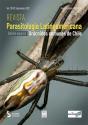
In this study we hypothesized that Grammostola rosea Walckenaer 1837, an active predator of large size that depends on its two paired book lungs for respiration, would have a refined low energy strategy based on its thin air-hemolymph barrier. The morphology of book lungs and the oxygen consumption at 20u and 30u C under normal and starvation conditions were studied. The oxygen consumption was low compared to that expected for spiders from the allometric relationship, 0.027 6 0.01 ml O2 g21 h21 (average 6 standard deviation), and it was depressed at 30u C under starvation. The harmonic mean thickness of the airhemolymph barrier was 0.14 6 0.03 mm, the respiratory surface density was 122.99 6 35.84 mm21, and the book lung volume ranged from 12.2 to 37.5 mm3. With these parameters a high oxygen diffusion capacity was estimated. The combination of low resting oxygen consumption and high pulmonary oxygen conductance results in very low gradients of partial oxygen pressures across the air-hemolymph barrier (0.12–0.16 kPa) required to satisfy the resting oxygen demands.

